The open loop audit prompt that separates real delegation from simulated work + 3 more prompts for overnight execution
Updated
•2 min read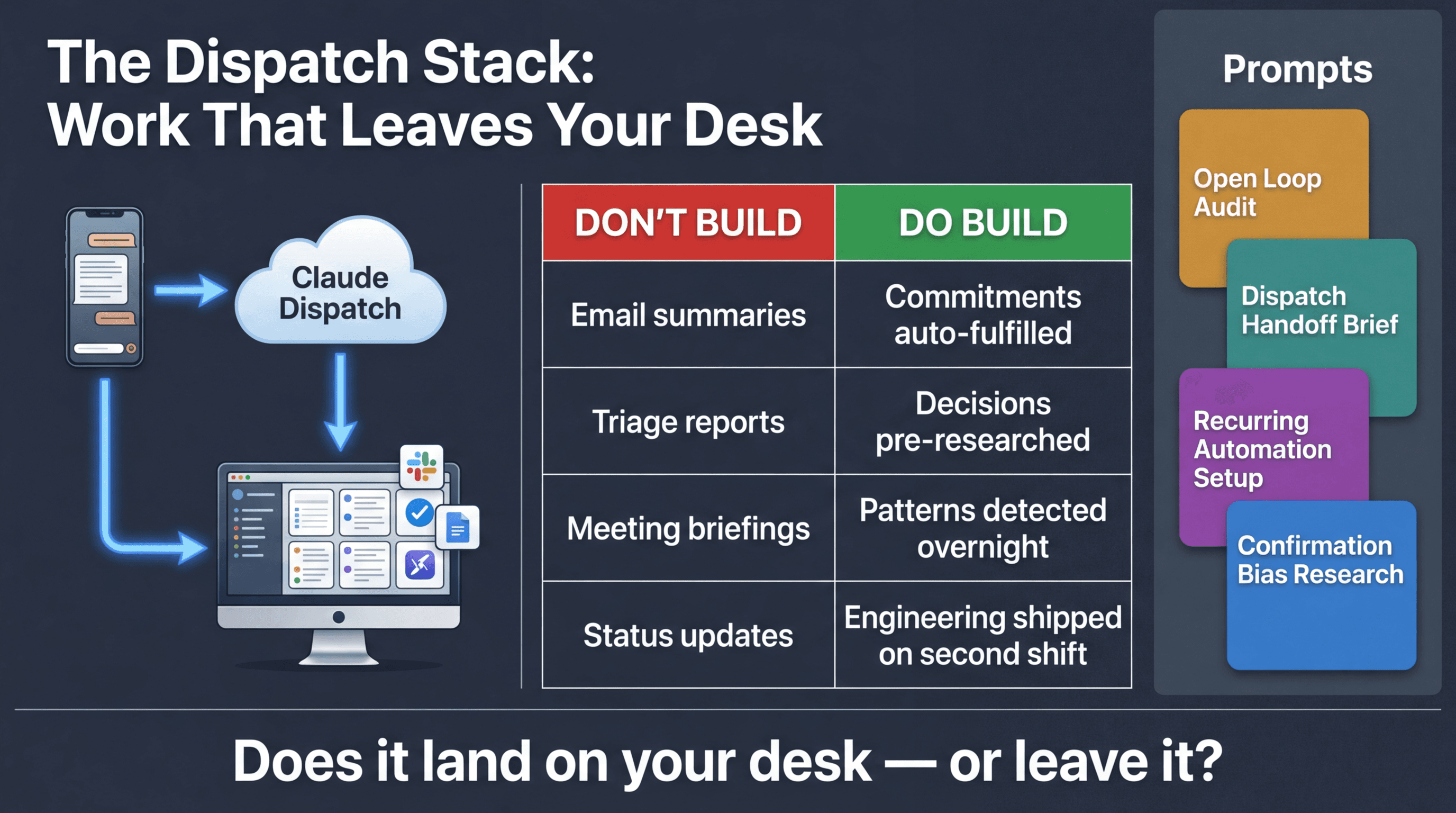
Summary: The Open Loop Audit Prompt — Nate's Substack
Main Thesis
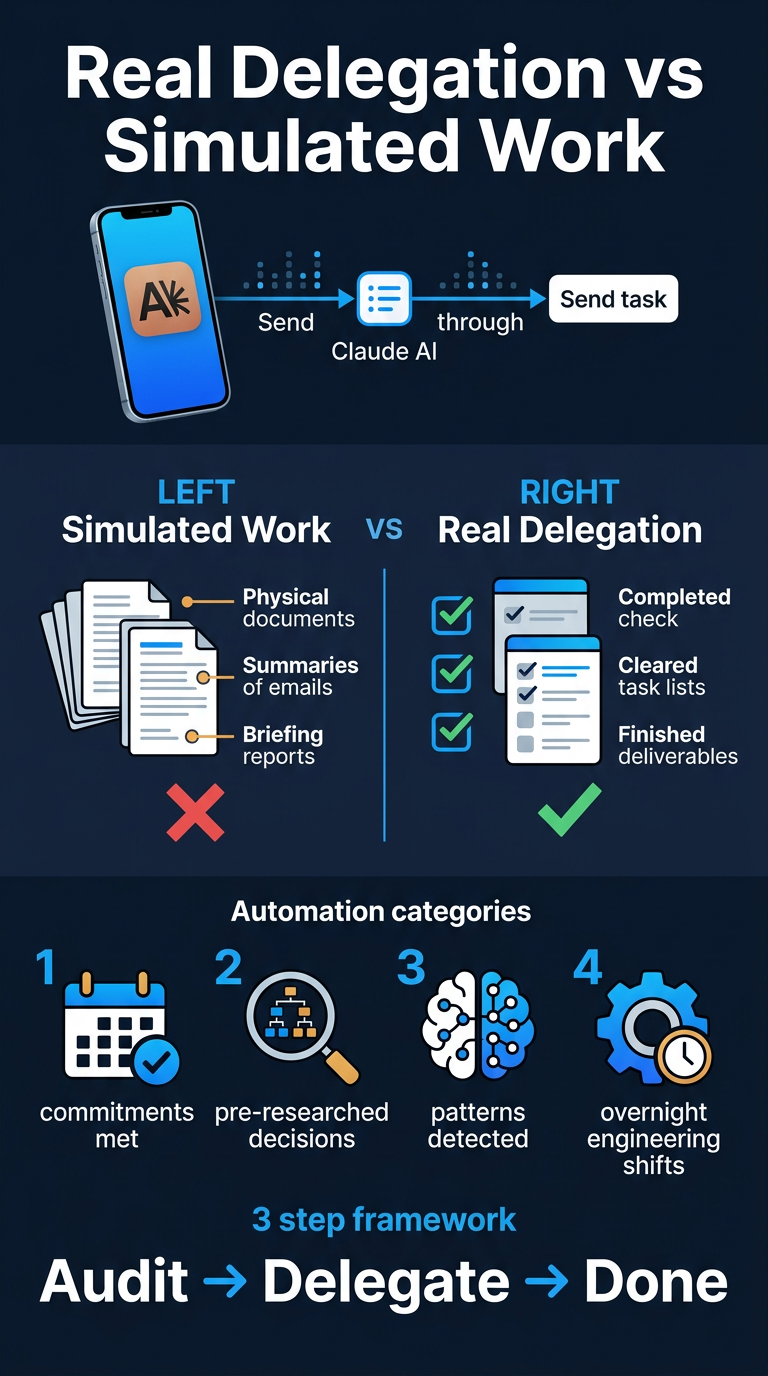
Anthropic's new Dispatch + Computer Use stack lets Claude operate autonomously on your desktop — clicking through apps, navigating software with no API, and delivering finished work while you're away. The central argument: most people will waste this capability on simulated work (briefings, summaries, triage reports) instead of work that actually leaves your desk rather than rearranging it.
Key Findings
- What Anthropic shipped: Dispatch enables remote text-based delegation to Claude, which then uses computer use to take over a desktop, open apps, and complete tasks end-to-end — not just draft outputs for human review.
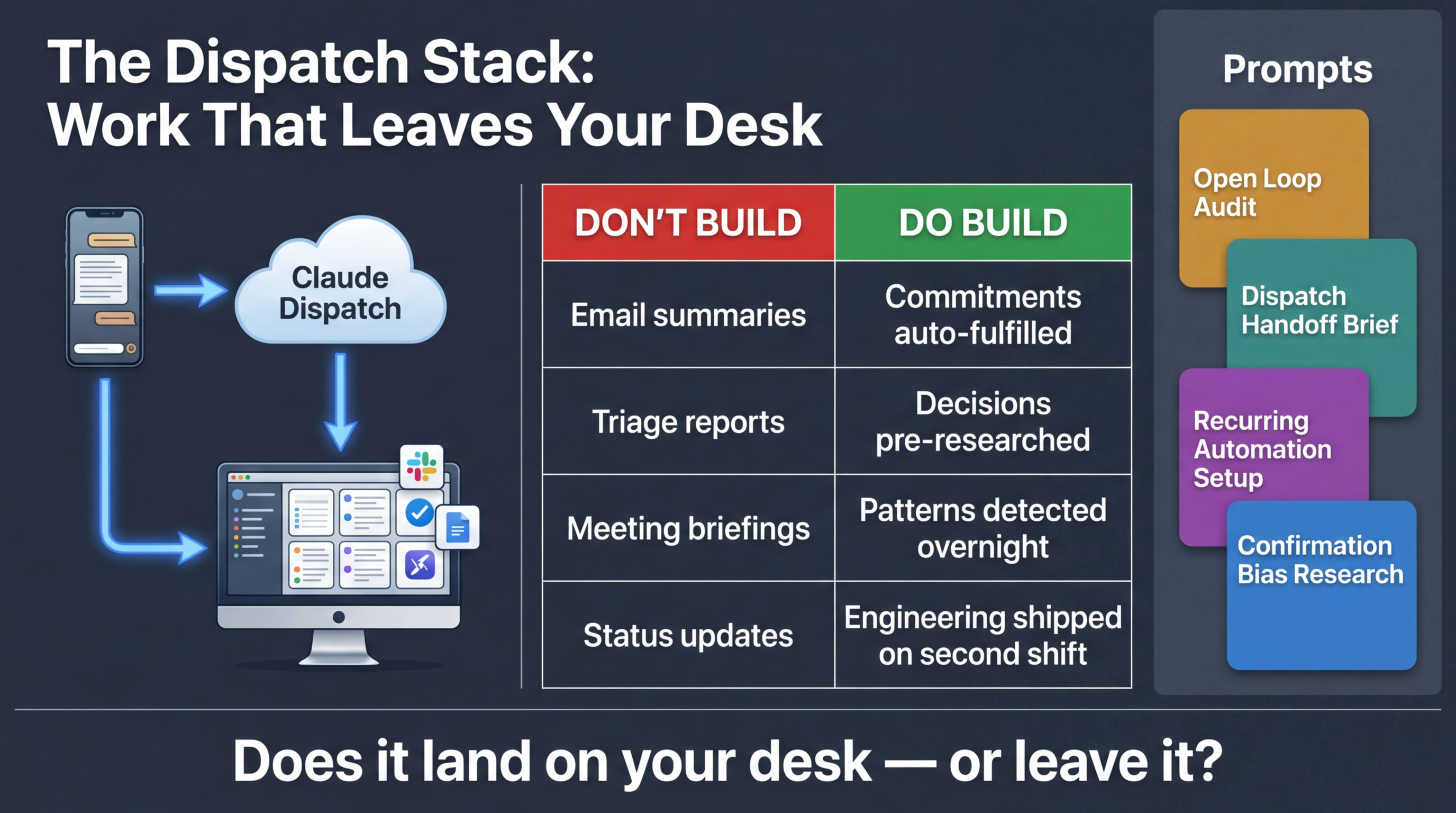
- The #1 mistake: Pointing agents at "proactive briefings" and summaries that create more to read rather than eliminating work. The agent looks busy. Your life doesn't change.
- The real distinction: Does work land on your desk or leave it? Only the latter justifies autonomous delegation.
- Four categories of work worth automating:
- Commitments that get met before they can lapse
- Decisions that arrive pre-loaded with gathered information
- Patterns your brain couldn't hold (spotted before competitors)
- Engineering/operational work that ships on a "second shift" without new hires
- Computer use as enterprise fallback: Reaches the "dark matter" of enterprise software — legacy tools and systems that will never have an API connector.
- Self-hosted vs. managed: Follows the same infrastructure shift pattern seen repeatedly over 20 years of tech cycles.
Practical Takeaways
- Run an open loop audit: Use the provided prompt to distinguish real delegation from simulated work before building any automation.
- Four ready-to-paste prompts included (paywalled): Dispatch handoff briefs, recurring automation setups, decision research prompts designed to counter confirmation bias, and the audit prompt itself.
- Stack components to set up: Cloud scheduling, persistent sessions, and parallel orchestration — all triggerable from your phone.
- Decision filter: Ask whether each proposed automation removes a task from your plate entirely, or just adds a new artifact to review.
- Overnight execution mindset: Frame Dispatch as a second shift — work that completes while you sleep, not work that prepares more work for when you wake up.