
The feature nobody covered this week just turned your AI memory system into an autonomous agent + the guide to wire it up
Updated
•2 min read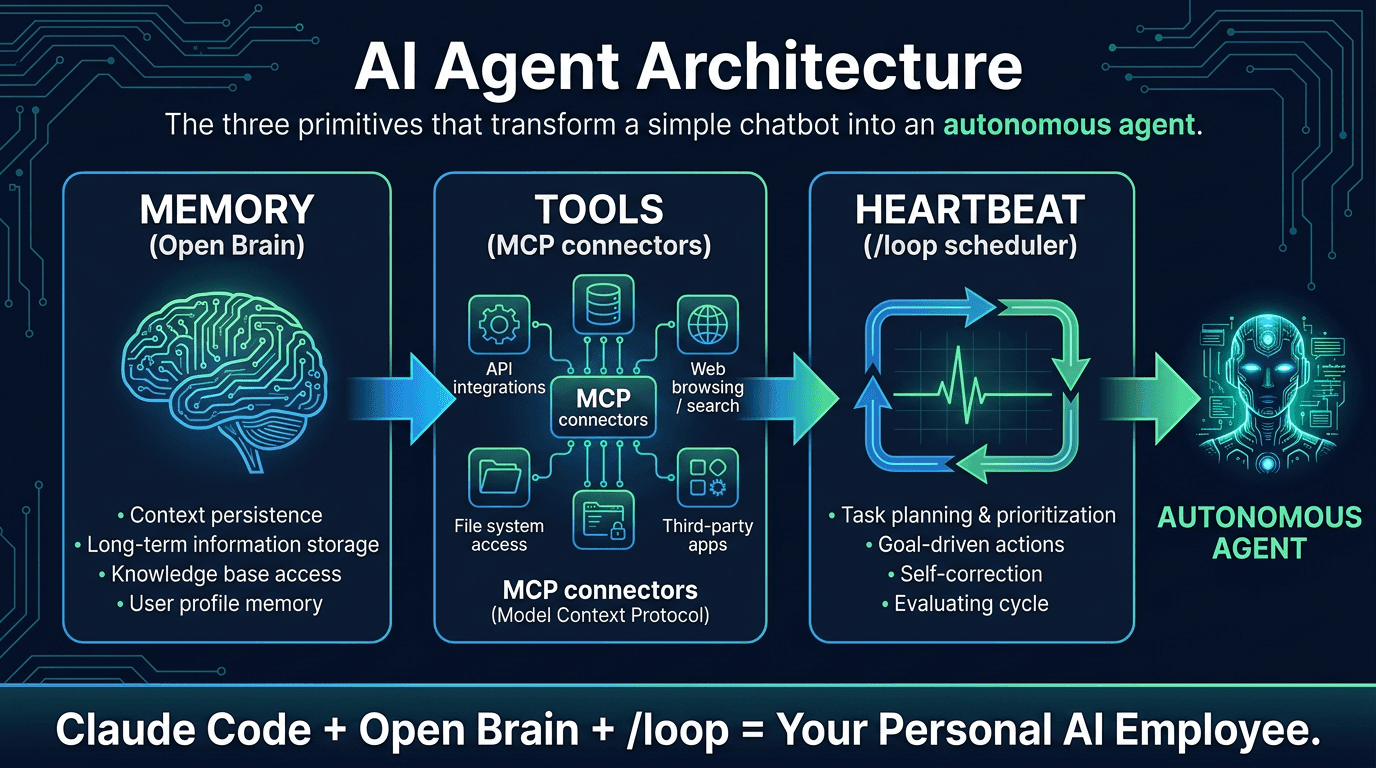
Original article: Read on Nate's Substack
Date processed: 2026-03-22
Summary
Main Thesis
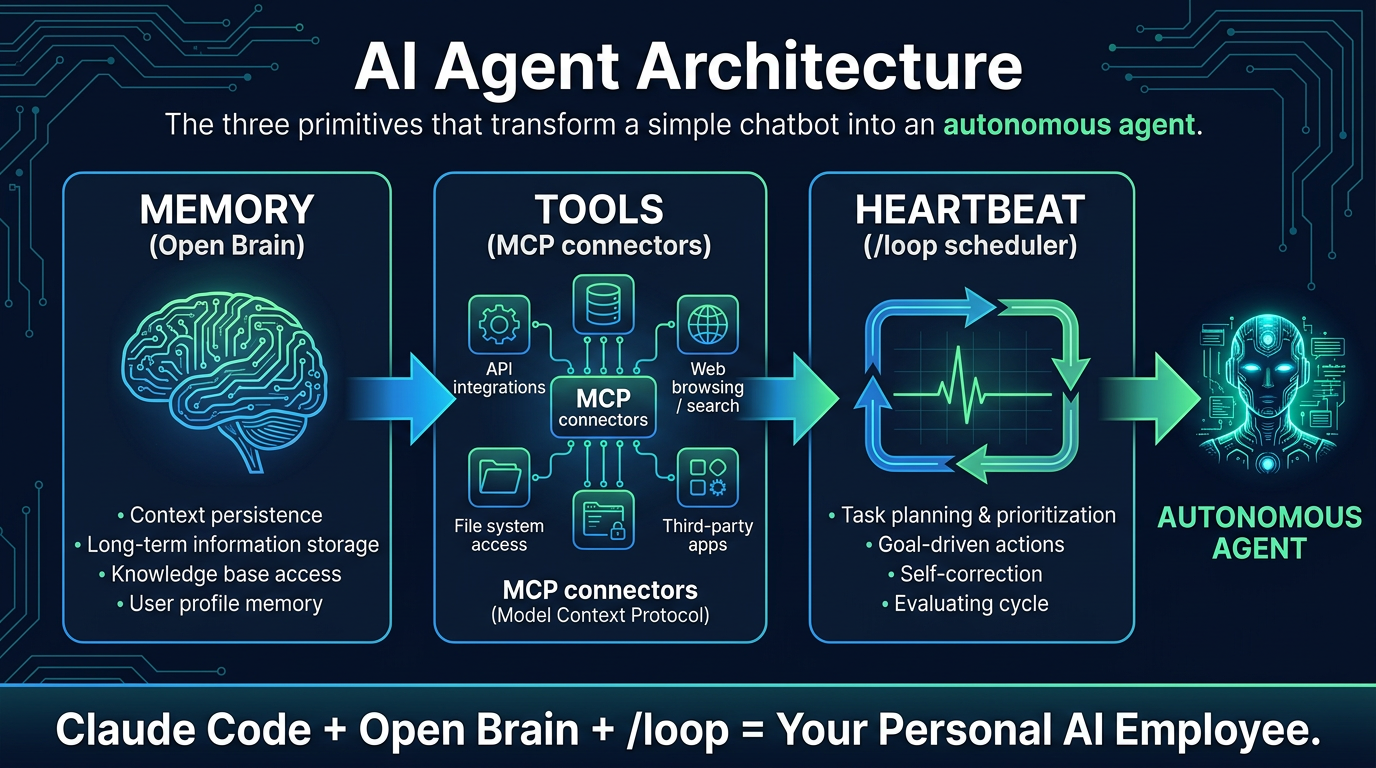
Anthropic's /loop command in Claude Code is the missing "heartbeat" primitive that completes the AI agent stack. Combined with memory (Open Brain) and tools (MCP), you now have everything needed to build a genuinely autonomous agent — one that wakes up on its own, does work, and reports back without you prompting it.
Key Arguments & Data Points
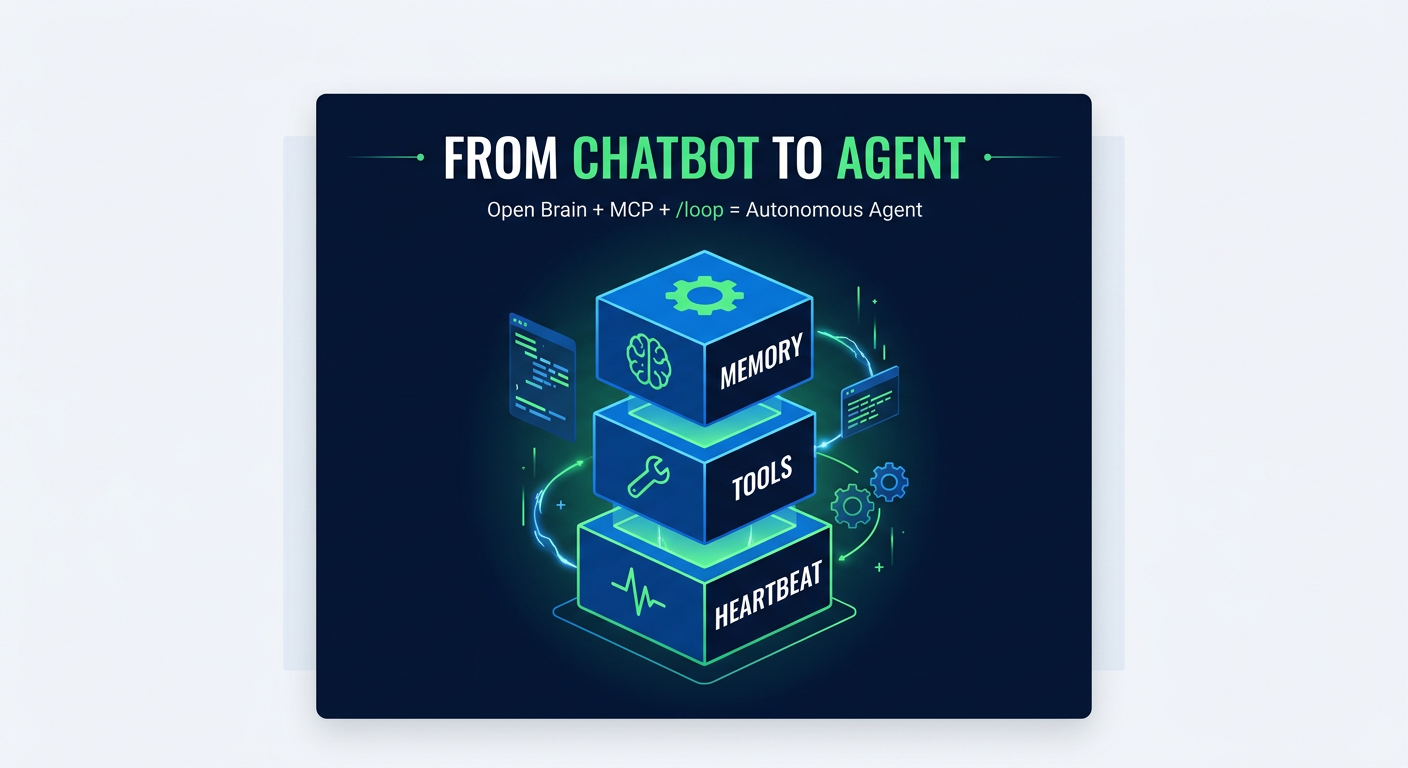
- Three primitives are required for a true agent: Memory (persistent context across sessions), Tools (ability to act in the world via MCP connectors), and a Heartbeat (autonomous scheduling).
/loopsupplies the third. /loopexplained: A Claude Code command that lets an agent run on a schedule — every 5 minutes, hourly, every morning at 9am — without human initiation.- The coverage gap: Most tech media framed
/loopas a developer convenience tool for automated monitoring. Nate argues this misses the bigger picture: it's the architectural piece that transforms Claude Code from a chatbot into an employee. - Not just for developers: Claude Code's user base has expanded well beyond engineers — marketers, PMs, and non-technical users are already using it. A terminal is just a chatbot without the guardrails.
- The "OpenClaw stack without the chaos": Nate describes the combination as functionally equivalent to an agent framework — same core capability, but with cleaner architectural separation between scheduling and memory that makes it more durable.
Practical Takeaways
- Build the three primitives in sequence: Start with Open Brain (memory), add MCP tool connections, then wire up
/loopfor scheduling. Each layer compounds. - Morning briefing as the capstone use case: Configure your agent to run overnight, synthesize updates from connected tools, and deliver a structured briefing — genuine delegation in action.
- Use cases highlighted: energy tracking, sales pipeline monitoring, daily briefings, automated research.
- A guide is included to build the
/life-engineskill with Claude Code, MCP, Telegram, and/loop— plus a companion guide to turn briefings into short animated videos on mobile. - The terminal as time travel: Using Claude Code now — before the friendly UI arrives — puts you months ahead of those waiting for a polished interface.
Key Quote
"The real story is that /loop is the last Lego brick. What was missing was the heartbeat — a way for the agent to wake up on its own and do work without you being the one to poke it every time."
Infographics