Most AI companies are renting their position. These 4 prompts tell you if yours is one of them.
Updated
•2 min read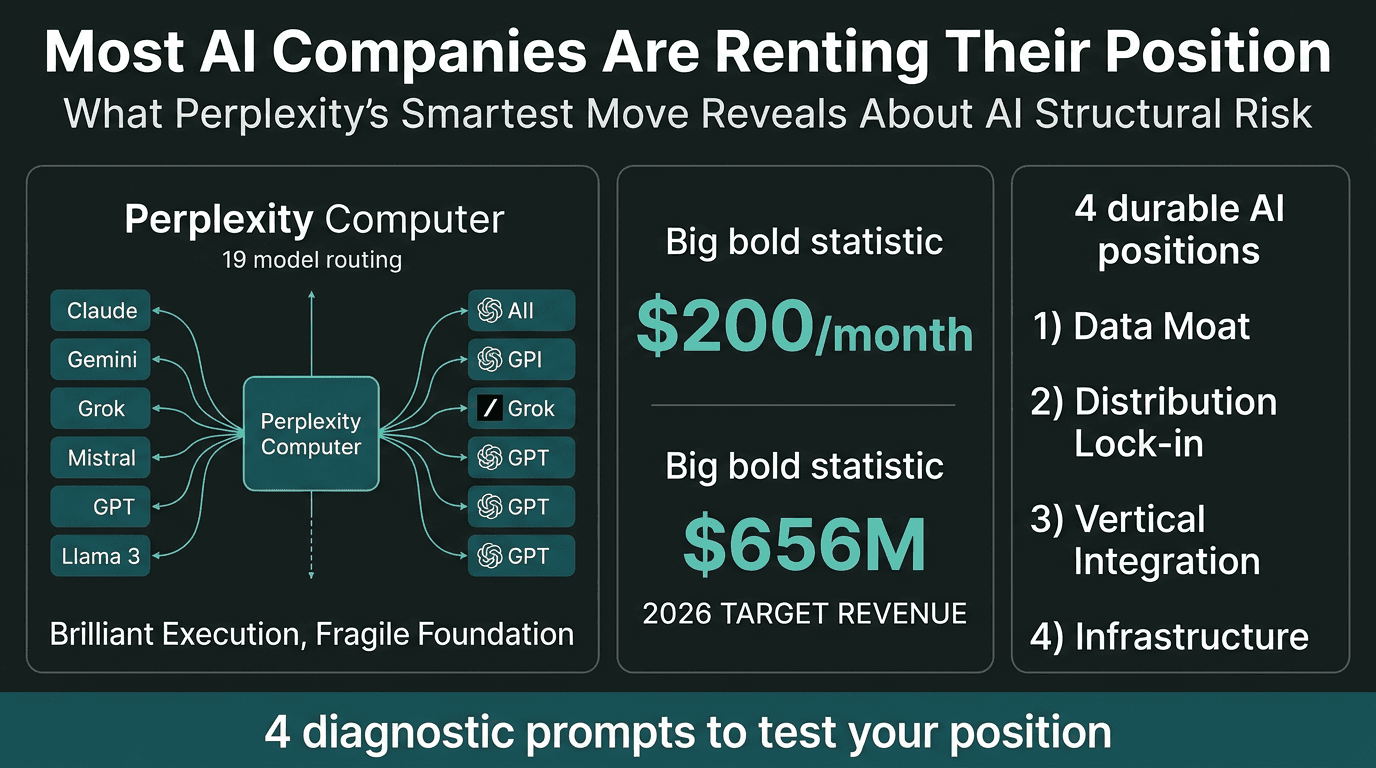
Original article: Read on Nate's Substack
Published: March 19, 2026 | Processed: March 20, 2026
Summary
Main Thesis
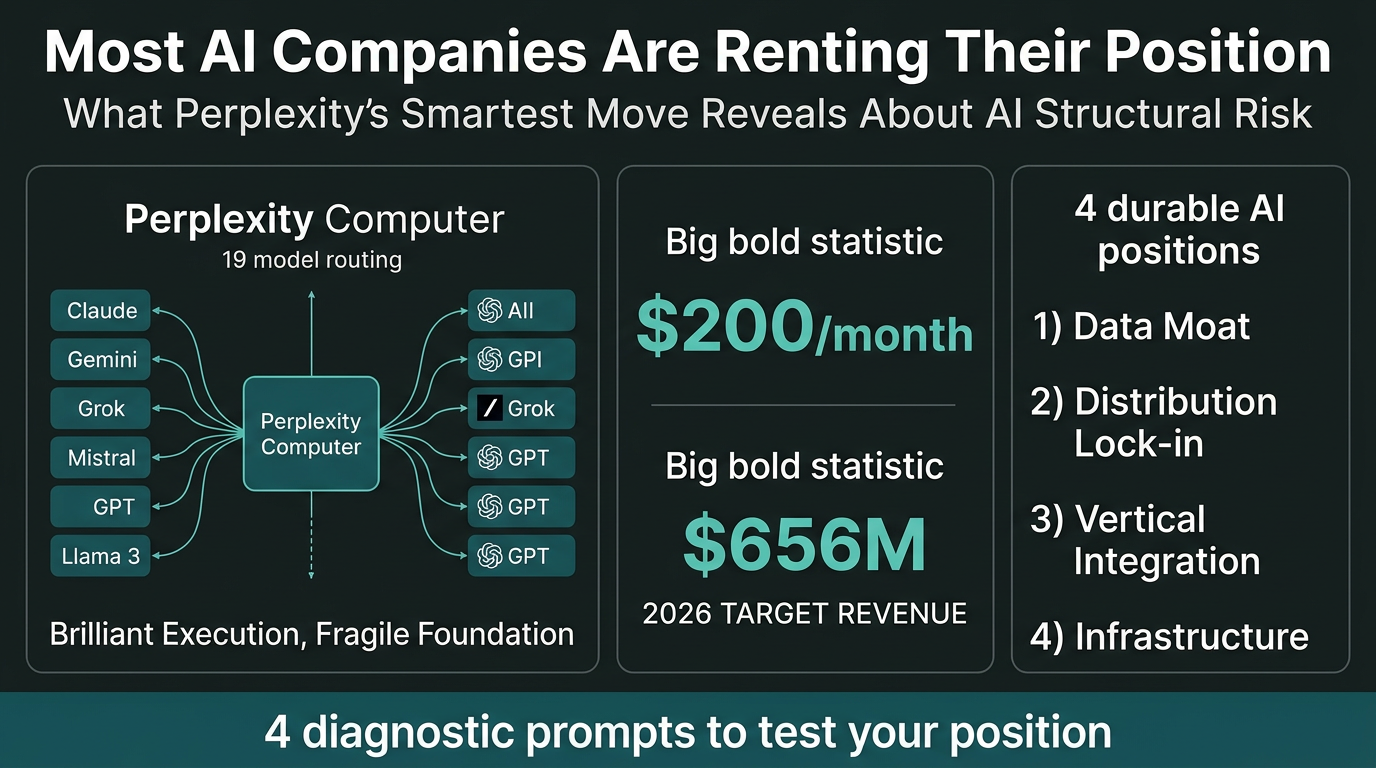
Perplexity Computer — launched February 25, 2026 — is arguably the best agentic product shipped that month. It is also a cautionary tale. Perplexity's core reasoning runs on Anthropic's Claude, its deep research on Google's Gemini, its speed layer on Grok. Despite brilliant execution, Perplexity's structural position is fragile: it is renting its intelligence from the very companies building competing products. This is not just Perplexity's problem — it is the condition of almost every AI company that isn't Anthropic, Google, OpenAI, or Meta.
Key Data Points & Findings
- Perplexity Computer: $200/month, routes work across 19 frontier models, persists for months, delivers finished artifacts asynchronously. Genuinely worth it for heavy research and ops workflows.
- Perplexity's 2026 revenue target: $656 million, with major enterprise customers already running their search API in production.
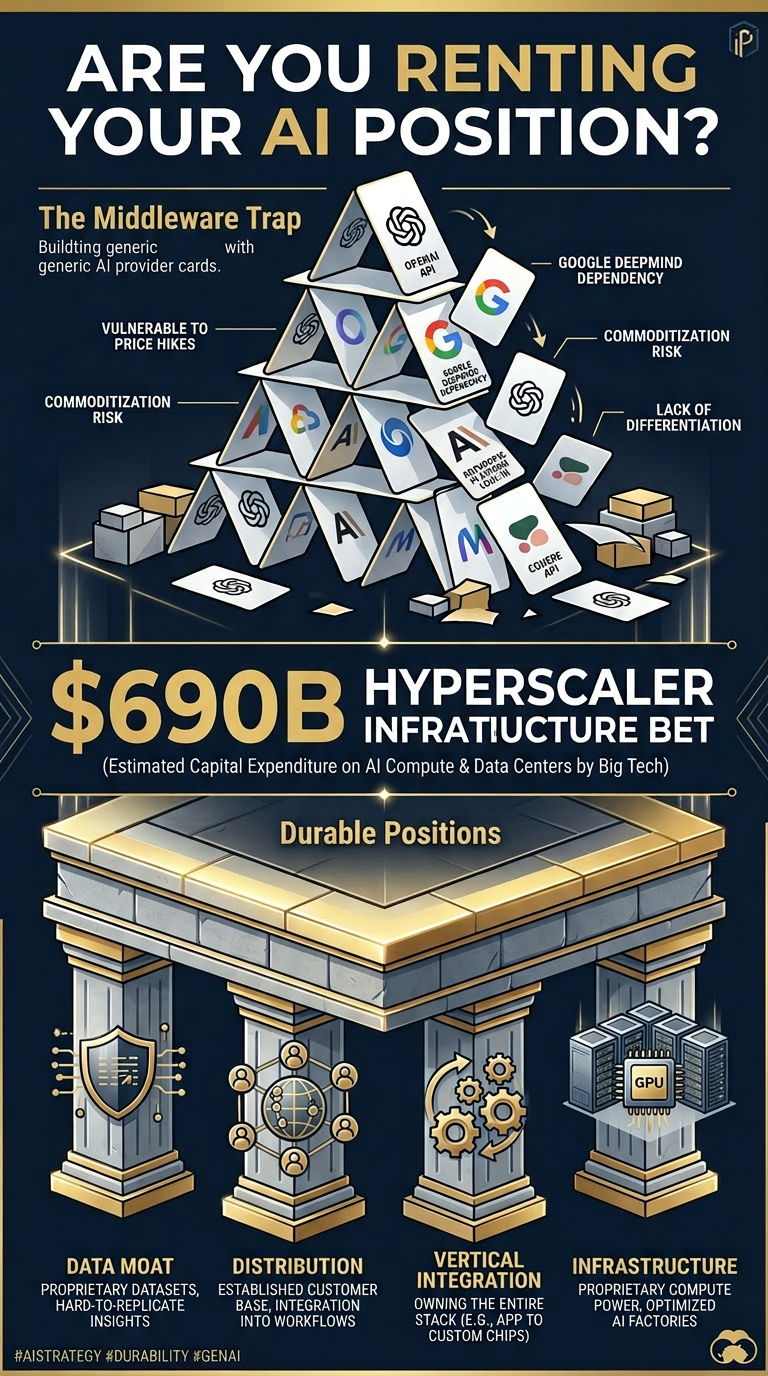
- The middleware trap: Most AI product companies depend on foundation model providers who are simultaneously competing with them. The hyperscalers' $690 billion infrastructure bet makes this asymmetry worse every month.
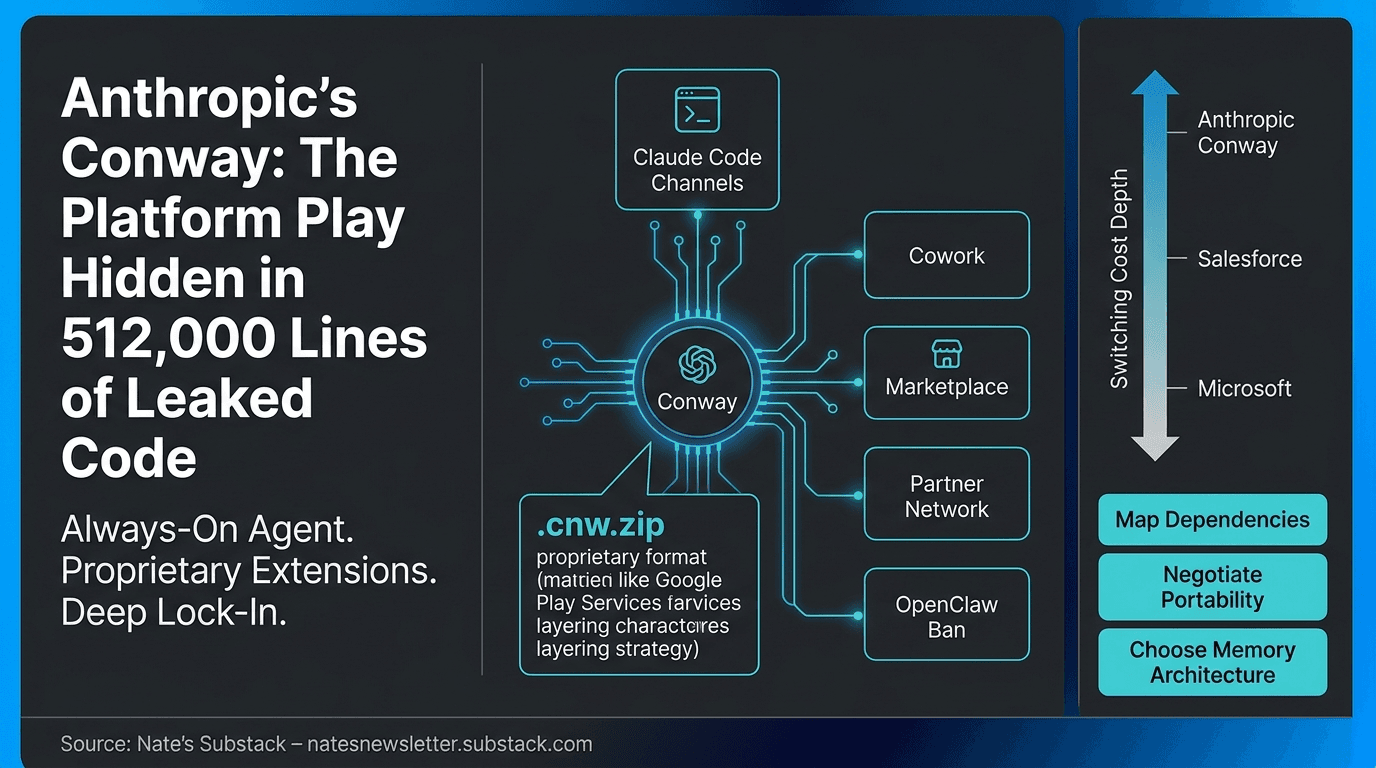
- Anthropic's counter-move: The same week Perplexity launched Computer, Anthropic shipped the enterprise expansion of Claude Cowork — with deep connectors, private plugin marketplaces, and seamless context passing. One model. They own it.
- Four positions that survive the middleware trap:
- Data Moat — proprietary datasets the hyperscalers can't replicate
- Distribution Lock-in — deep workflow integration that's expensive to rip out
- Vertical Integration — owning the full stack in a specific domain
- Infrastructure — being below the model layer, not above it
Practical Takeaways
- Run a five-step diagnostic on your company, portfolio company, or client to determine if you're building a durable position or renting one from a competitor.
- Ask: If Anthropic, Google, or OpenAI decided to compete directly with our product next quarter, what's left? If the honest answer is "not much", you're in the middleware trap.
- Good execution on the wrong layer of the stack will not save you. Perplexity is proof that product excellence and structural fragility can coexist.
- The four prompts in the article help you diagnose: (1) your dependency map, (2) your switching costs, (3) your moat surface area, and (4) where your value actually lives.
Frameworks
- The Middleware Trap: Occupying the layer between foundation models and end users without owning either side
- Structural position diagnostic: 5-step test to determine if your AI position is owned or rented
- The Four Durable Positions: Data, Distribution, Vertical Integration, Infrastructure
Infographics