Executive Briefing: 80% of what makes your product worth buying lives in people's heads. Agents can't read it. Here's what to do about it + 4 prompts to start this week
Original article: Read on Nate's Substack
Published: March 22, 2026 | Processed: March 23, 2026
Summary
Main Thesis
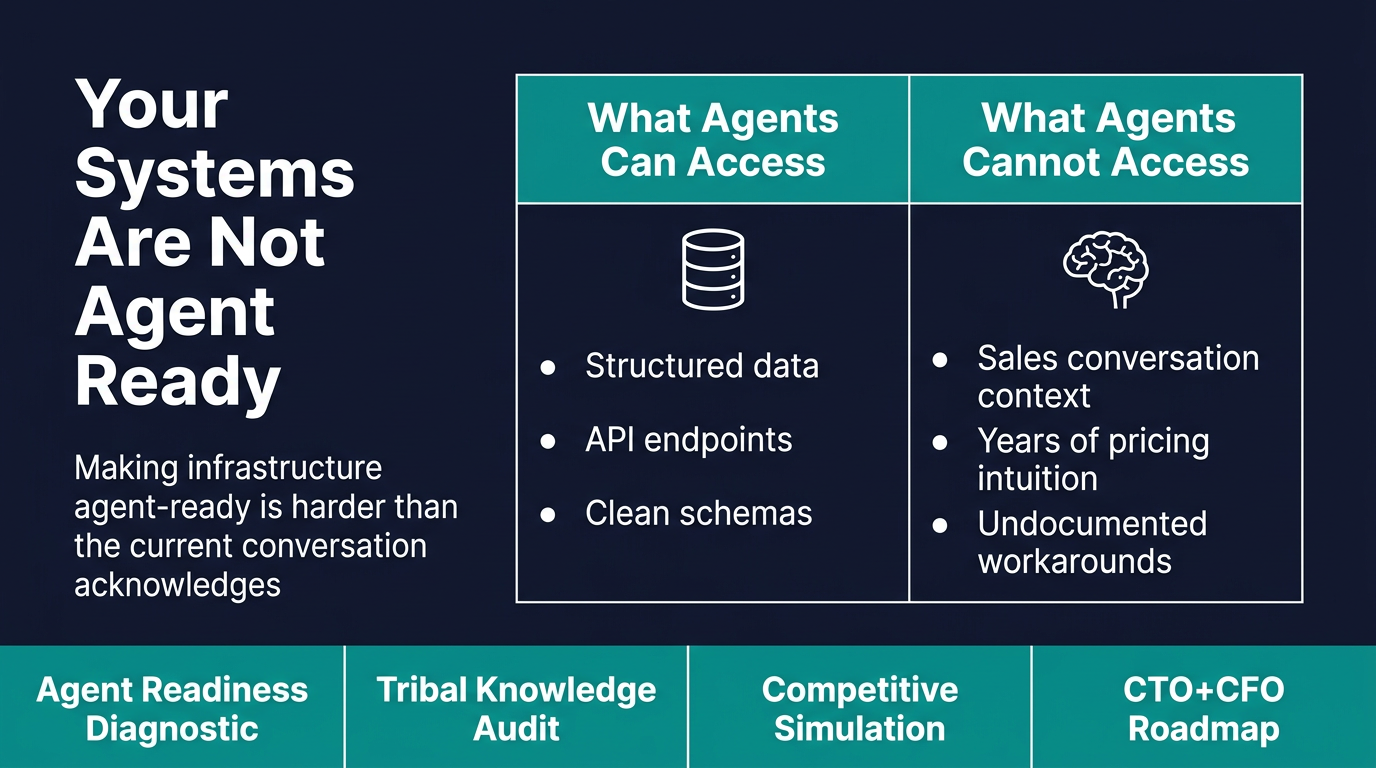
OpenClaw going from a weekend project to 250,000 GitHub stars — with Jensen Huang calling it the "operating system for personal AI" at GTC — is not the real story. The real story is the structural precondition almost nobody is talking about: whether your systems are agent-readable and agent-writable. Not your chatbot or your AI features, but the actual transactional infrastructure that lets agents discover, evaluate, and complete purchases on your platform. Making that infrastructure agent-ready is significantly harder than the current conversation acknowledges.
Key Arguments
The Napster Moment Inside OpenClaw
The demand signal from agentic buyers is real and irreversible. Apple, Google, and Meta are responding the way the music industry responded to file sharing — with friction, CAPTCHA walls, and anti-bot systems. They will lose for the same reasons.
Agent Readability Is a Data Quality Problem, Not an API Problem
Making your systems agent-readable forces cleanness of data architecture down the entire stack. The forcing function — making implicit business logic explicit and machine-legible — is the real strategic story, not the agents themselves.
The 80% That Lives in People's Heads
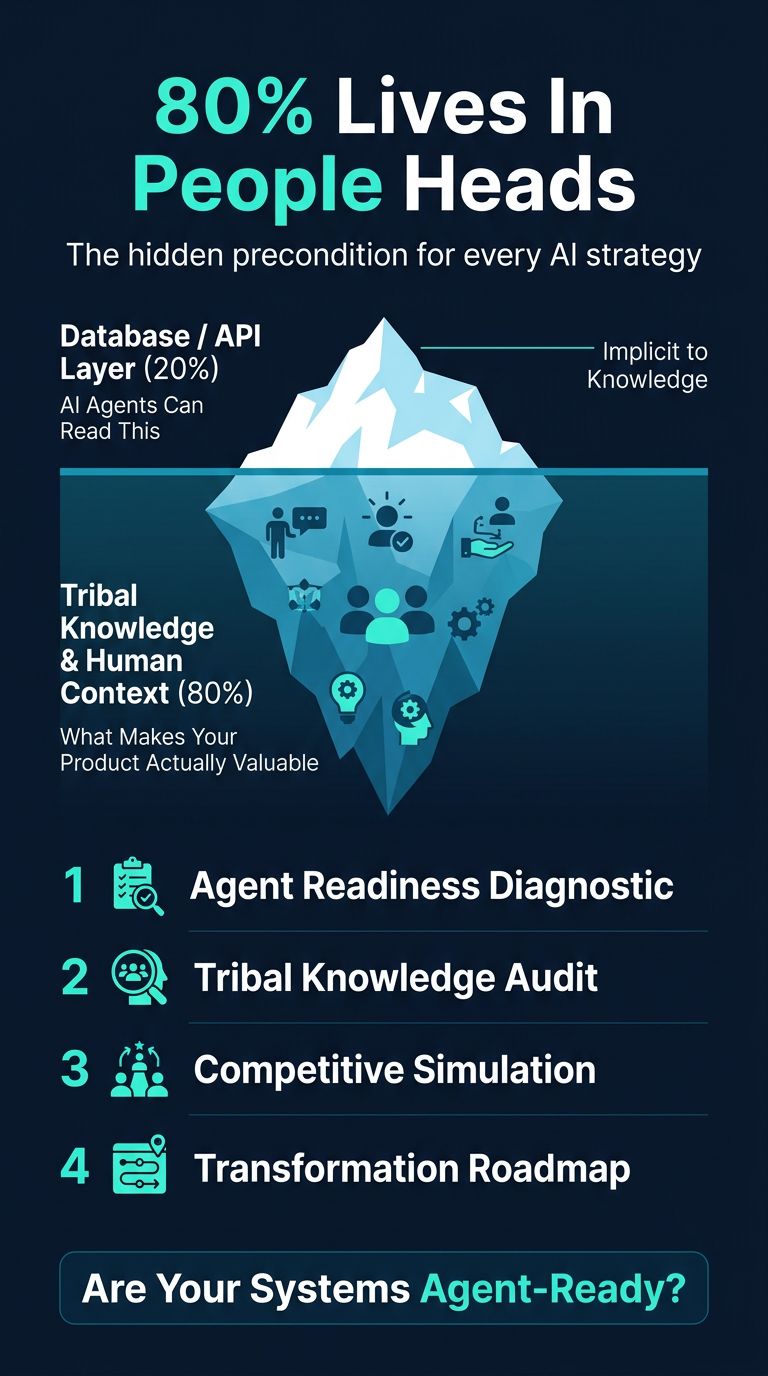
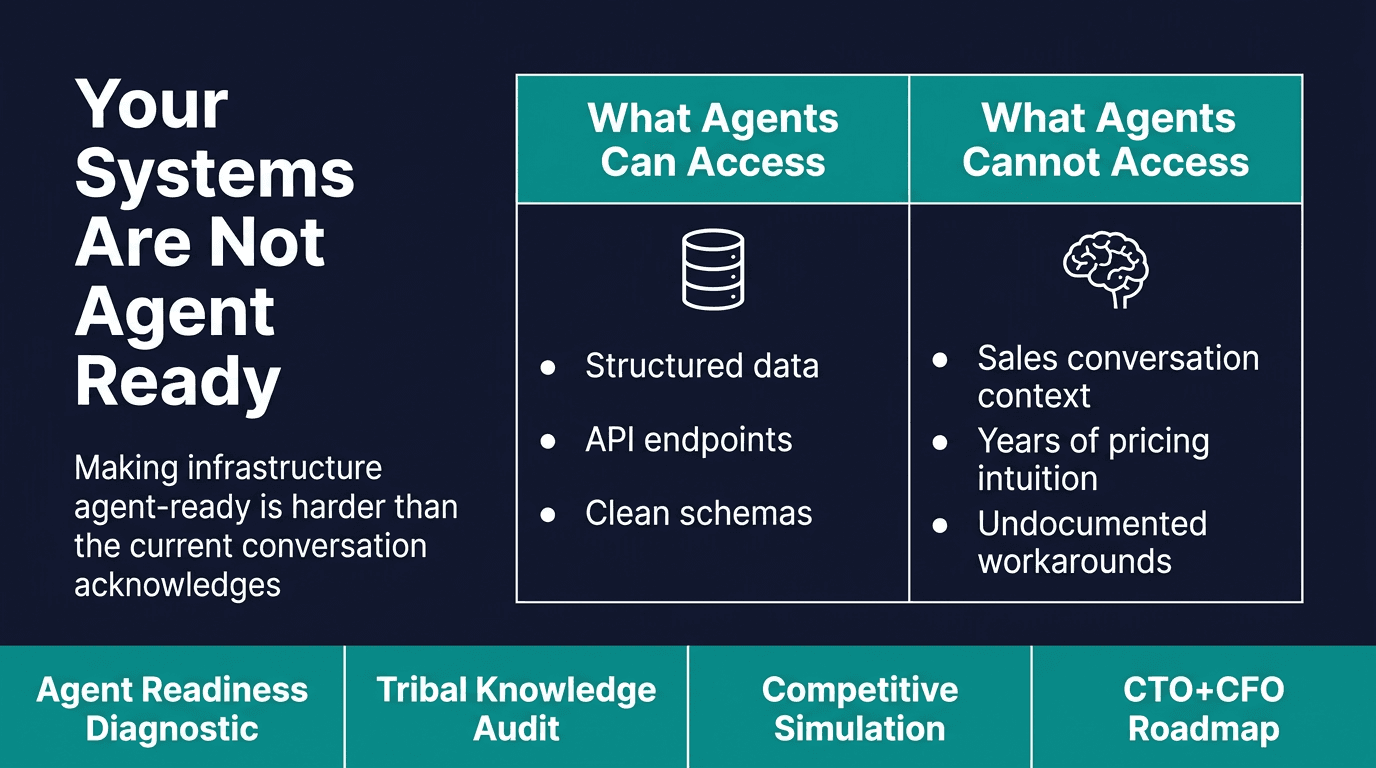
The highest-leverage insight: 80% of what makes your product worth buying is tribal knowledge — pricing exceptions, sales conversation context, undocumented workarounds, years of relationship intuition. It lives in people's heads, not your databases. Agents can't read it, and most companies have no plan for this.
Four Misconceptions Leading Executives Astray
- "We already have an API" — APIs expose endpoints, not meaning
- "Our AI chatbot handles this" — chatbots don't transact at the infrastructure layer
- "This is a technical problem for engineering" — it's a data architecture and knowledge management problem
- "We can do this later" — switching costs compound every quarter
Practical Takeaways
Five Diagnostic Exercises:
- Map all transactional flows and identify where agent handoffs break
- Audit tribal knowledge: quantify what percentage of product meaning lives outside your databases
- Run a competitive simulation in 30 minutes to assess your exposure
- Build an agent readiness score for your top 10 revenue flows
- Create a transformation roadmap your CTO and CFO can align on
Four Prompts Included:
- Agent Readiness Diagnostic — maps where your transactional flows break
- Tribal Knowledge Audit — quantifies the 80% living outside your databases
- Competitive Simulation — 30-minute exercise to assess competitive exposure
- Transformation Roadmap — a plan both CTO and CFO can align on
Key Data Points
- OpenClaw: 250,000 GitHub stars in weeks after launch
- Jensen Huang called it the "operating system for personal AI" at GTC
- NVIDIA built an enterprise platform on top of it
- Nate's estimate: ~80% of product value lives in tribal knowledge, not structured data
Infographics