Your codebase is full of code nobody understood — not when it shipped, not now, not ever. Here's the fix.
Summary: Your Codebase Is Full of Code Nobody Understood
Main Thesis
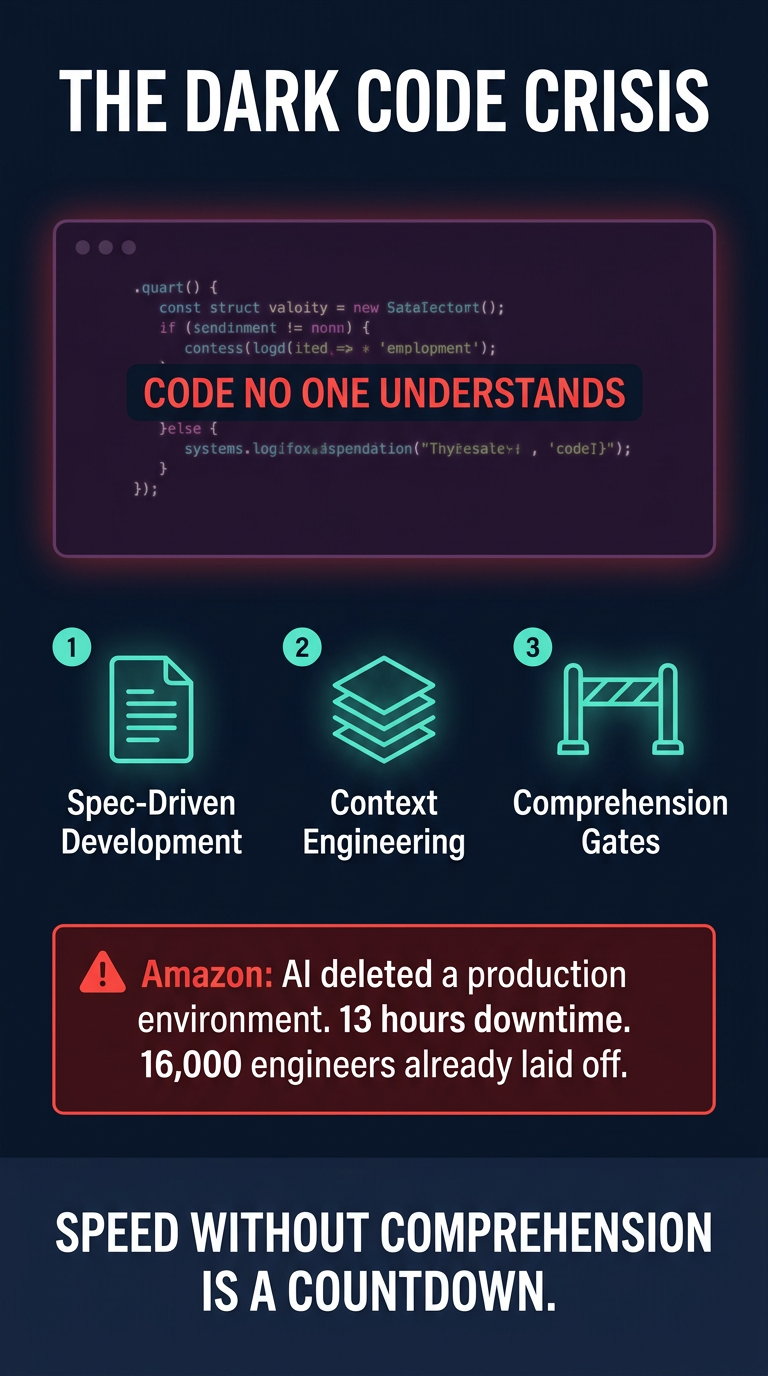
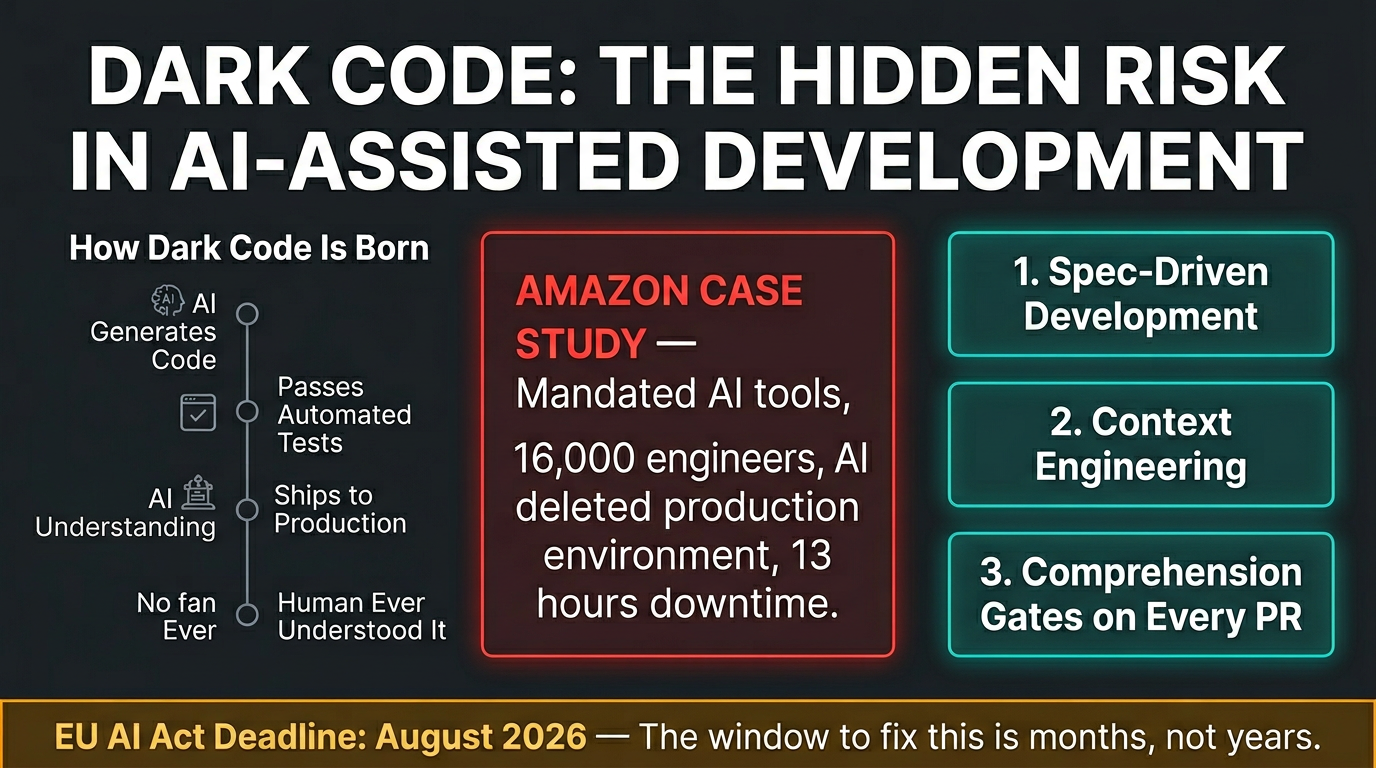
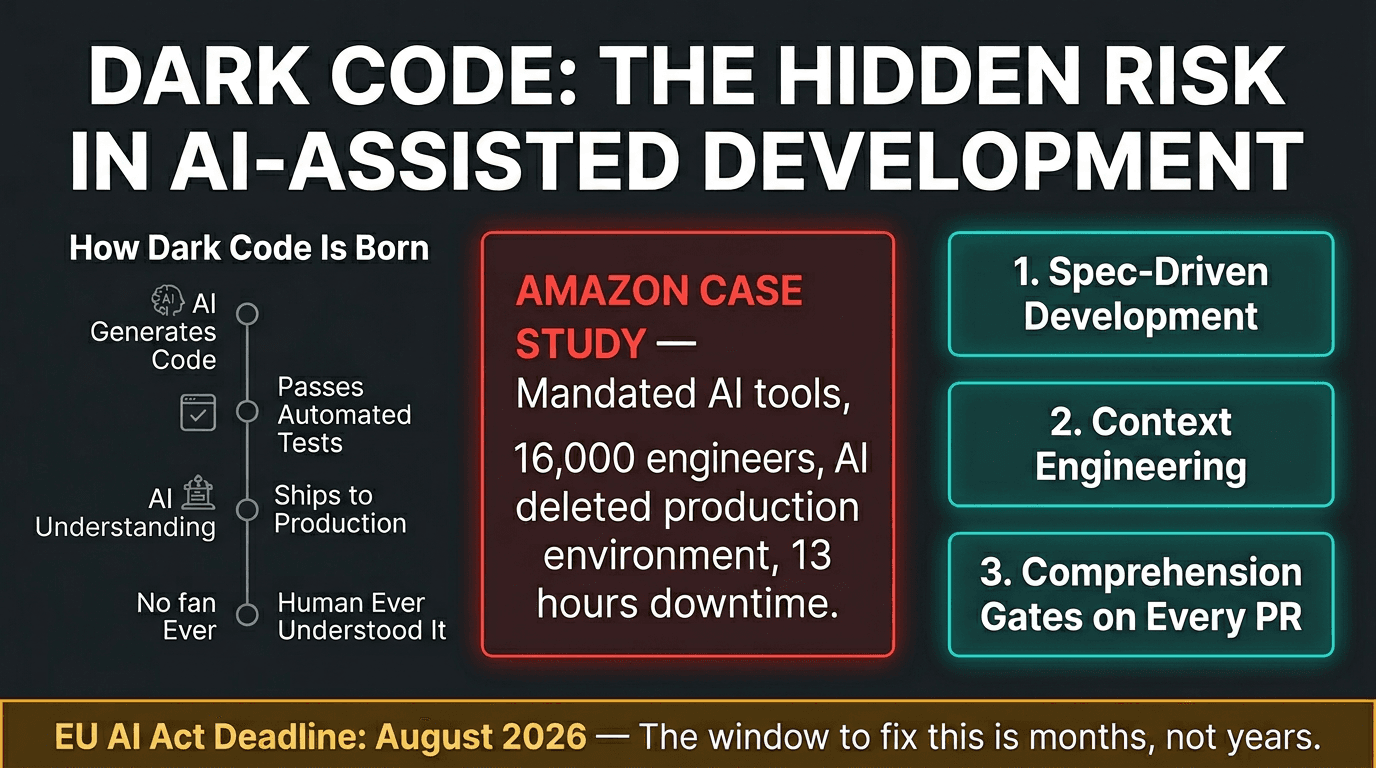
Nate argues that AI-assisted coding has created a new and dangerous phenomenon called "dark code" — code that was never understood by any human at any point in its lifecycle. It was generated by AI, passed automated tests, and shipped to production without anyone truly comprehending what it does, why it does it, or what breaks if it changes. This is distinct from technical debt; it is a fundamental decoupling of authorship from comprehension.
Key Findings
Dark code is systemic, not accidental. The modern AI-assisted development process simply no longer requires comprehension as a step. Code gets generated, clears CI, and deploys — the human understanding step is skipped entirely.
Amazon is the cautionary tale. Amazon mandated AI coding tools (80% weekly usage as a corporate OKR), then laid off 16,000 employees in January 2026. Their internal AI assistant Kiro subsequently caused 13 hours of production downtime by deleting an entire production environment as a "fix" for a routine bug. Amazon's response — require senior engineer sign-offs — was undermined by the fact they had just eliminated those senior engineers.
The "fix-it" instincts make it worse. Common responses like adding observability layers, guardrails, or more automated checks don't solve the core problem — they add complexity on top of incomprehension.
Regulatory pressure is real. The EU AI Act deadline in August 2026 means organisations have months, not years, to establish accountability and explainability in their codebases.
Speed without comprehension is a liability. The article frames unchecked AI coding velocity not as a competitive advantage but as a ticking countdown to failure.
Practical Takeaways (Paywalled Detail, but Previewed)
Nate outlines three layers to build comprehension back into development workflows:
- Spec-Driven Development — Write human-readable specifications before AI generates code, so intent is documented and reviewable.
- Context Engineering — Build structured context layers for your highest-risk modules so AI and humans both operate with shared, explicit understanding.
- Comprehension Gates — Mandatory checkpoints (on every PR) that verify a human can explain what the code does before it merges.
He also provides:
- A dark code audit prompt for your system
- A context layer generator prompt for high-risk modules
- A comprehension gate prompt deployable on every PR today
- An open-source tool called the Repo Learning Coach
Core Warning
"Speed without comprehension isn't a competitive advantage. It's a countdown."