
The Largest IPO in History Is Engineered to Spend Your Retirement Savings. You Don't Get a Vote.
Updated
•2 min read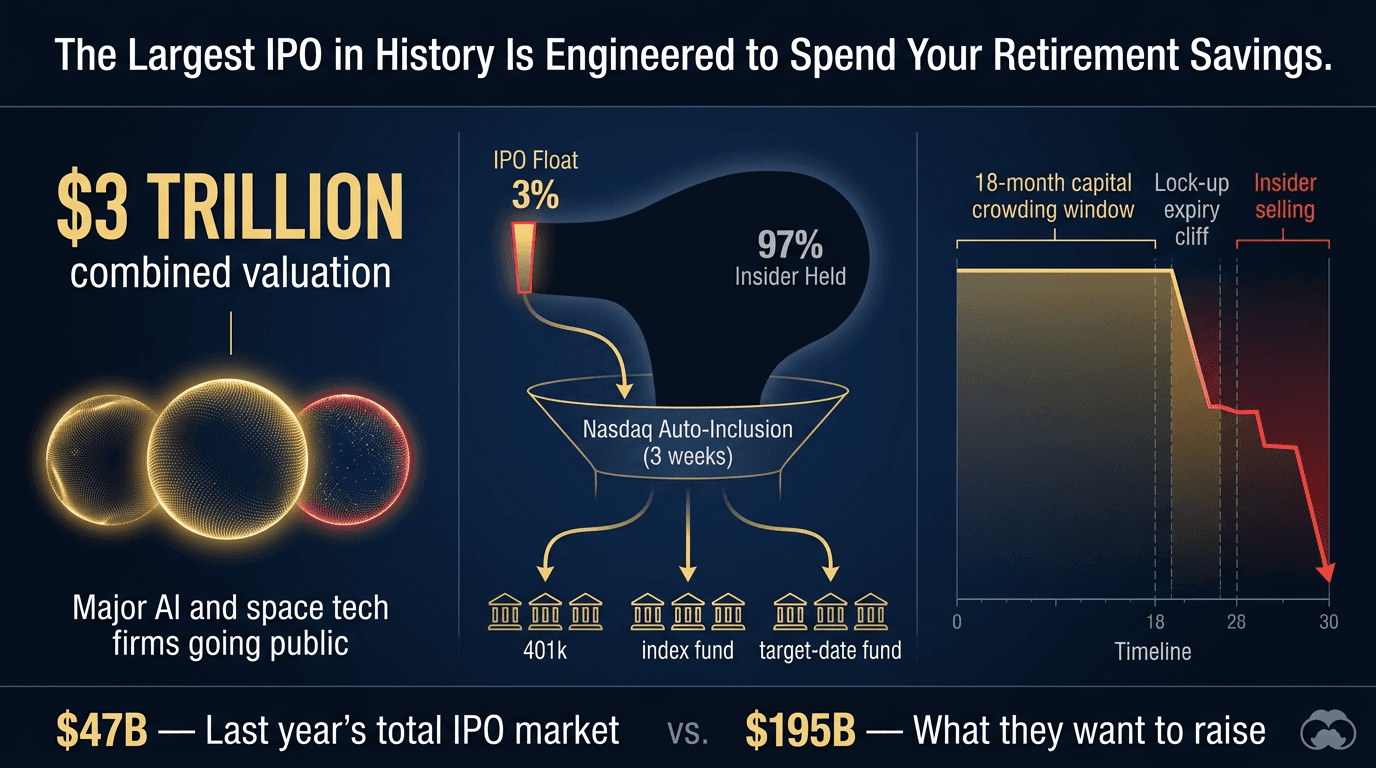
The Largest IPO in History Is Engineered to Spend Your Retirement Savings
Main Thesis
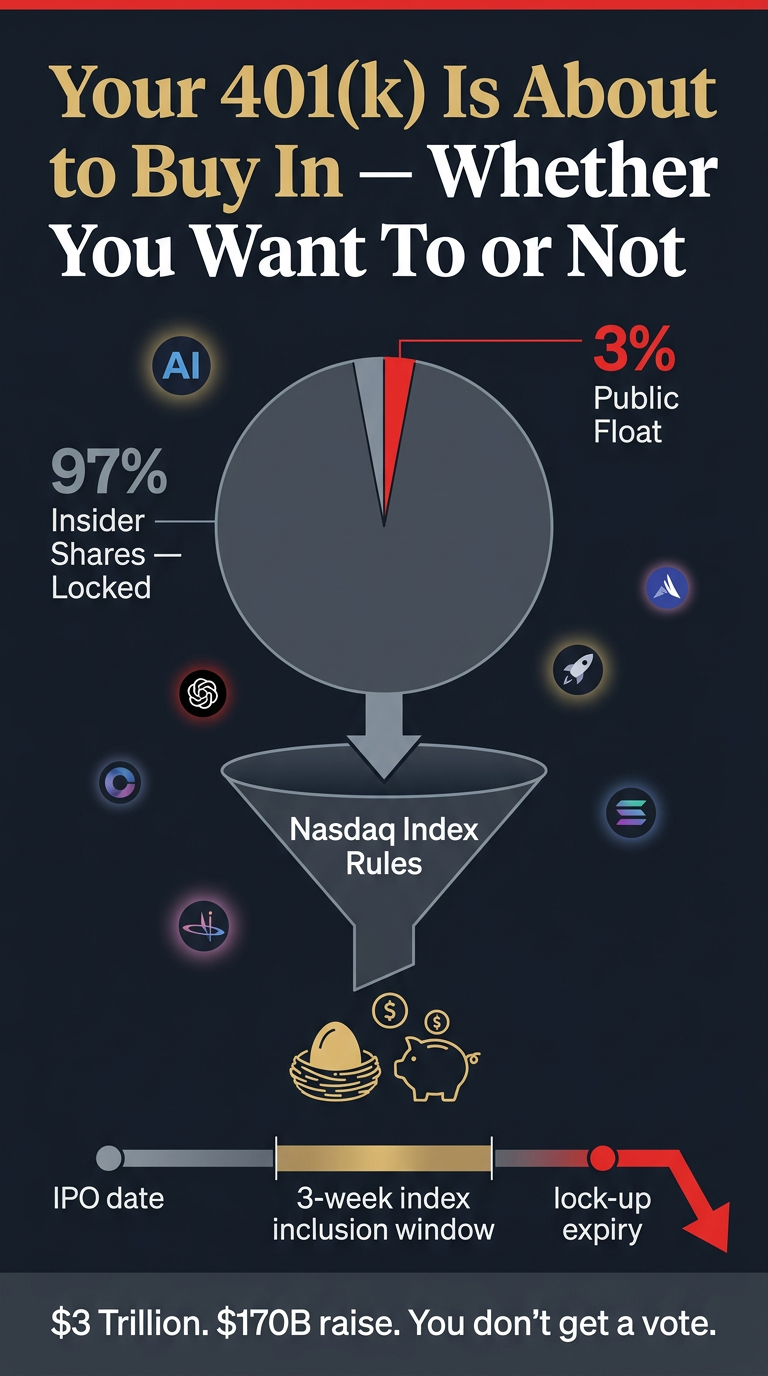
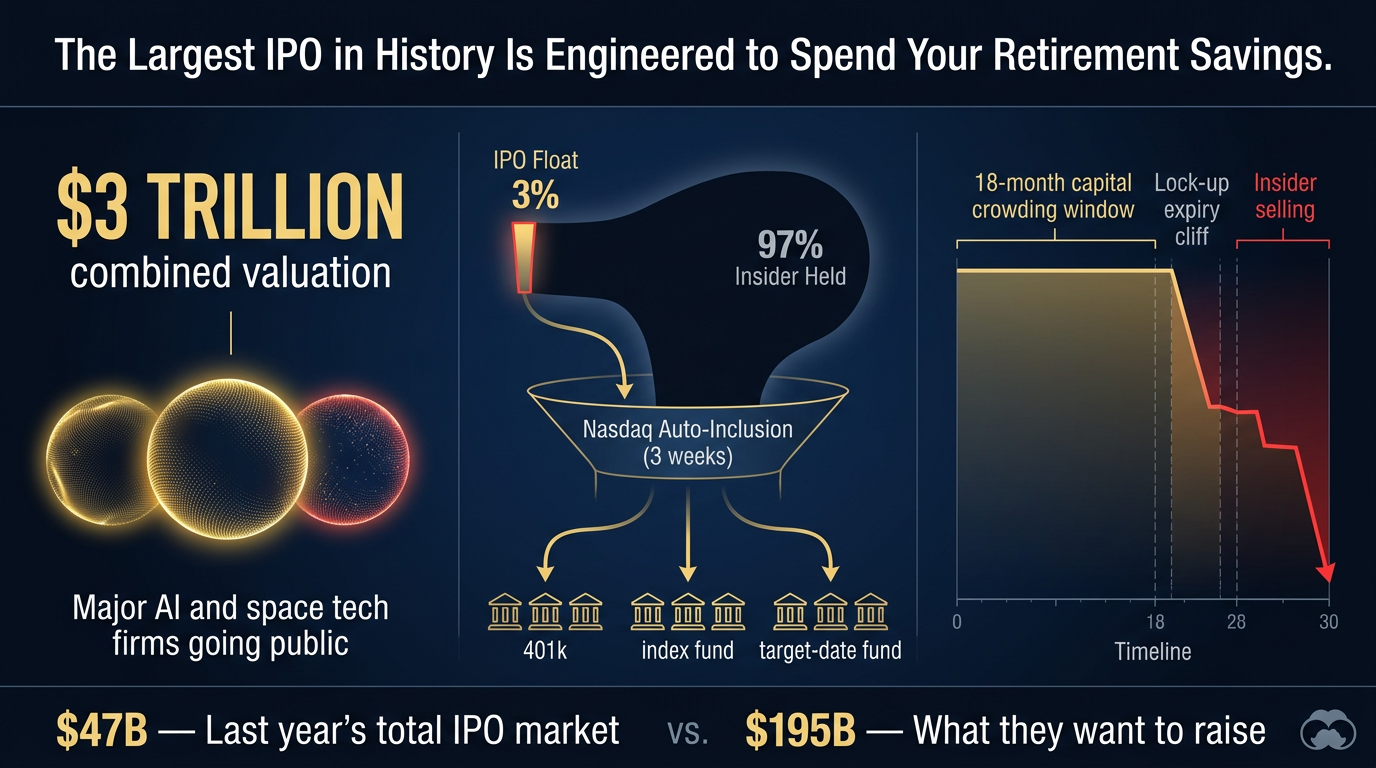
SpaceX, OpenAI, and Anthropic — collectively valued at over $3 trillion — are planning to go public within 12 months, aiming to raise $170–195 billion in a market that only handled $47 billion in IPOs last year. The mechanics of how these IPOs are structured mean that ordinary retirement savers will automatically buy in at inflated prices, with no say in the matter.
Key Findings
🎯 The Tiny-Float Playbook
- All three companies plan to sell only ~3% of shares publicly, keeping 97% held by insiders
- This artificial scarcity drives prices far above real value — a preview was seen when a small fund holding tiny SpaceX/Anthropic stakes traded at 1,500% above net asset value within 4 days
- Investors pay for access, not actual value
📊 Nasdaq Rewrote the Rules
- Nasdaq changed its index inclusion rules so these stocks can be force-fed into index funds and 401(k)s within three weeks of IPO
- If you hold any index fund, target-date fund, or 401(k), the system will automatically buy these stocks for you — at whatever price the market sets — without your vote or consent
⏱️ The Lock-Up Trap
- After IPO, insiders are typically locked from selling for a set period
- When the lock-up expires, the remaining 97% of shares that weren't available at IPO can flood the market
- By that point, retirement funds will have already bought in at peak prices
💸 Capital Crowding Effect
- Three mega-IPOs of this scale will consume Wall Street's attention and capital for 18 months
- Every other company seeking investment — including startups — will be competing for whatever is left over
Practical Takeaways
The article (paywalled beyond this point) promises four actionable prompts:
- Exposure audit — check how much of your retirement accounts is vulnerable
- Board-ready briefing generator — communicate this risk at an executive level
- Startup equity stress test — reassess the value of any private company equity you hold
- Timing matrix — map major financial decisions against the 18-month IPO window
Bottom Line
The structure of these IPOs is not accidental — it is engineered to maximize insider returns while distributing risk to passive retail investors through index fund automation. The average person doesn't need to actively choose to invest; the system does it for them.